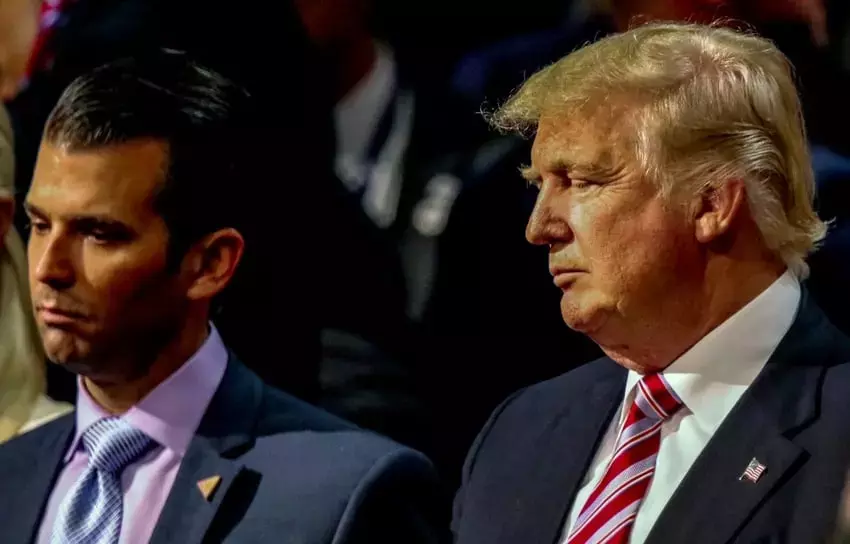
Former President Donald Trump recently announced his achievement of a perfect score on his fourth consecutive cognitive examination, a feat he highlights as a record. This personal milestone has led him to advocate for a legislative change: a mandate requiring all aspiring presidential candidates to undergo similar rigorous cognitive assessments. This proposition reignites the broader conversation surrounding the mental fitness of individuals holding or seeking high office, especially given the current absence of federal laws dictating such screenings.
Donald Trump's Cognitive Test Success Spurs Call for Mandatory Candidate Evaluations
On May 31, 2026, former President Donald Trump declared on Truth Social that he had once again achieved a perfect score of 30 out of 30 on the Montreal Cognitive Assessment (MoCA). This marks his fourth consecutive flawless performance on the standardized test, which is designed to evaluate mild cognitive impairment. Trump underscored the rarity of such consistent high scores, particularly across multiple attempts.
Following this personal achievement, Trump publicly challenged Congress and the Democratic Party to enact legislation that would compel all presidential and vice-presidential candidates to undertake high-difficulty cognitive tests. He framed this as a crucial step to ensure the mental acuity of those seeking the nation's highest offices. The former president emphasized that his physician at Walter Reed National Military Medical Center had, in January, confirmed his "exceptional health."
The MoCA is a concise, 10-minute assessment covering various cognitive domains, including memory, attention, language, and executive function. A score of 26 or higher is generally deemed normal, with clinicians acknowledging that while a perfect score is uncommon, it is attainable. This renewed call for mandatory cognitive testing by Trump echoes previous sentiments. Notably, in 2024, Patti Davis, daughter of former President Ronald Reagan, supported the idea of mandatory cognitive tests for presidential candidates, suggesting it was a beneficial measure.
This development adds another layer to the ongoing public and political debate concerning the cognitive fitness of elected officials, a topic that has gained increasing prominence in recent years. Currently, no federal law in the United States mandates cognitive testing for individuals running for president.
The push for mandatory cognitive testing for presidential candidates highlights a critical need for transparency and accountability regarding the mental fitness of those aspiring to lead. While personal achievements like former President Trump's perfect scores are commendable, the broader implication is a call for a standardized, objective measure to assure the public of their leaders' cognitive capabilities. This discussion transcends individual political figures and encourages a more informed electorate, fostering greater trust in the electoral process and the individuals who seek to govern. It's a conversation that warrants serious consideration for the future health of democratic institutions.