In a groundbreaking cinematic endeavor, Dutch writer-director Mari Sanders brings to the screen "Stand Up," a feature film that bravely delves into the often-misunderstood world of disability. The movie, which recently had its international premiere at the Tribeca Festival, offers a refreshing and authentic perspective on life in a wheelchair, moving beyond simplistic narratives. Sanders, who himself uses a wheelchair, imbues the film with personal experiences, creating a story that is both deeply personal and universally resonant, challenging viewers to reconsider their preconceived notions about disability.
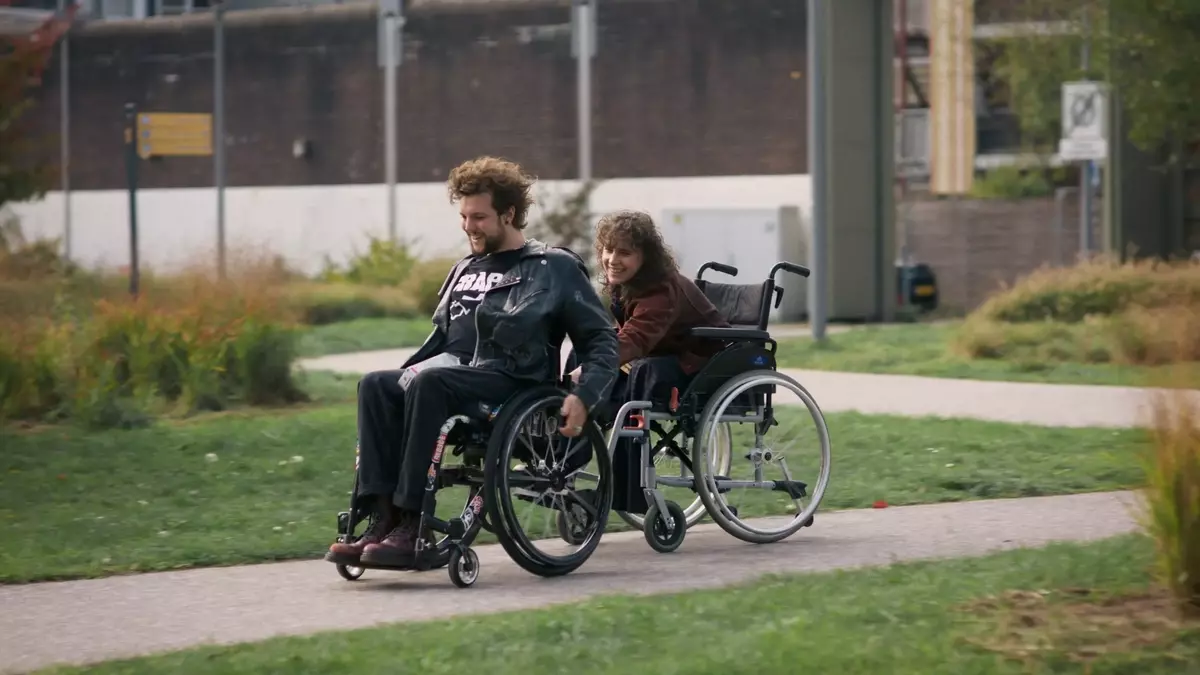
"Stand Up" centers on Vera, a vibrant 23-year-old whose life takes an unexpected turn after an accident leaves her a wheelchair user. Her journey of self-discovery leads her to Zander, a 22-year-old aspiring stand-up comedian who has embraced his identity as a wheelchair user since birth. The film aims to portray individuals with disabilities not as symbols of tragedy or objects of pity, but as complex, multi-faceted people navigating their lives with humor, resilience, and individuality. Sanders' motivation for creating the film stemmed from a long-standing dissatisfaction with how disability is typically depicted in media, often reducing it to a superficial plot device rather than exploring its profound impact on human experience.
Sanders embarked on this project nearly eight years ago, marking his directorial debut. He candidly shares his frustration with existing films about disability, many of which failed to genuinely represent his own experiences. He emphasizes that while representation is not the sole objective, it holds significant importance. He views disability as an "artistic goldmine" that cinema has largely failed to fully exploit, often merely scratching the surface. Feeling a strong sense of responsibility, Sanders sought to illuminate the realities of disability when stories are told by those who truly live them, focusing on the social and emotional landscape rather than just the physical limitations.
One of the film's core themes is the idea of disability as a process of transition, a rite of passage. Sanders observes that while living with a disability can present challenges, it also offers unique perspectives and strengths. He recounts conversations with individuals who acquired disabilities later in life, many of whom expressed no desire to change their path, acknowledging that while disability may take some things away, it also brings profound insights and a clearer sense of purpose. This idea is central to Vera's character arc, as her accident, initially perceived as a setback, ultimately helps her to define her aspirations and understand her true self.
A particularly poignant scene in "Stand Up" depicts a group of wheelchair users being directed to the back of a cinema by staff, ostensibly for safety reasons. Sanders reveals this scene is rooted in real-life experiences, highlighting the arbitrary and often illogical rules that disabled individuals encounter. He questions the rationale behind such regulations, pointing out the inherent contradictions and the lack of empathy that often underlies them. The film subtly critiques societal reactions to disability, showcasing how people's discomfort or desire to "overprotect" can lead to discriminatory practices. Sanders explains that for individuals with disabilities, every interaction becomes a mirror, reflecting the attitudes and biases of others, allowing them to quickly discern trustworthiness and genuine understanding.
The casting process for "Stand Up" presented its own set of challenges and revelations. Initially, a broad casting call for actors with disabilities yielded no responses from the Dutch film industry. However, by leveraging his personal network within the disability community, Sanders received an overwhelming number of applications, underscoring a significant disconnect between the industry and disabled talent. This experience led to an inclusive casting workshop where aspiring actors, many without prior experience, found a supportive community. It was during these sessions that the iconic cinema scene was conceived, born from improvisation and personal anecdotes, ultimately leading Sanders to cast all participants in the film, transforming a casting call into a moment of collective empowerment and artistic collaboration.
Sanders acknowledges that elements of both lead characters, Vera and Zander, reflect aspects of his own internal dialogue. He describes it as a "Jekyll and Hyde" dynamic, representing two common coping mechanisms among disabled individuals: one striving for normalcy and adaptation, the other embracing and even celebrating their disabled identity with defiance. "Stand Up" portrays the evolving relationship between these two perspectives, exploring their strengths and flaws. The film skillfully demonstrates how Zander, initially appearing confident and self-assured, reveals deeper vulnerabilities, suggesting that the mentor-student dynamic can often reverse. This intricate portrayal of character depth and emotional complexity underscores the film's commitment to showcasing disability in its full, human dimension, devoid of reductive stereotypes.