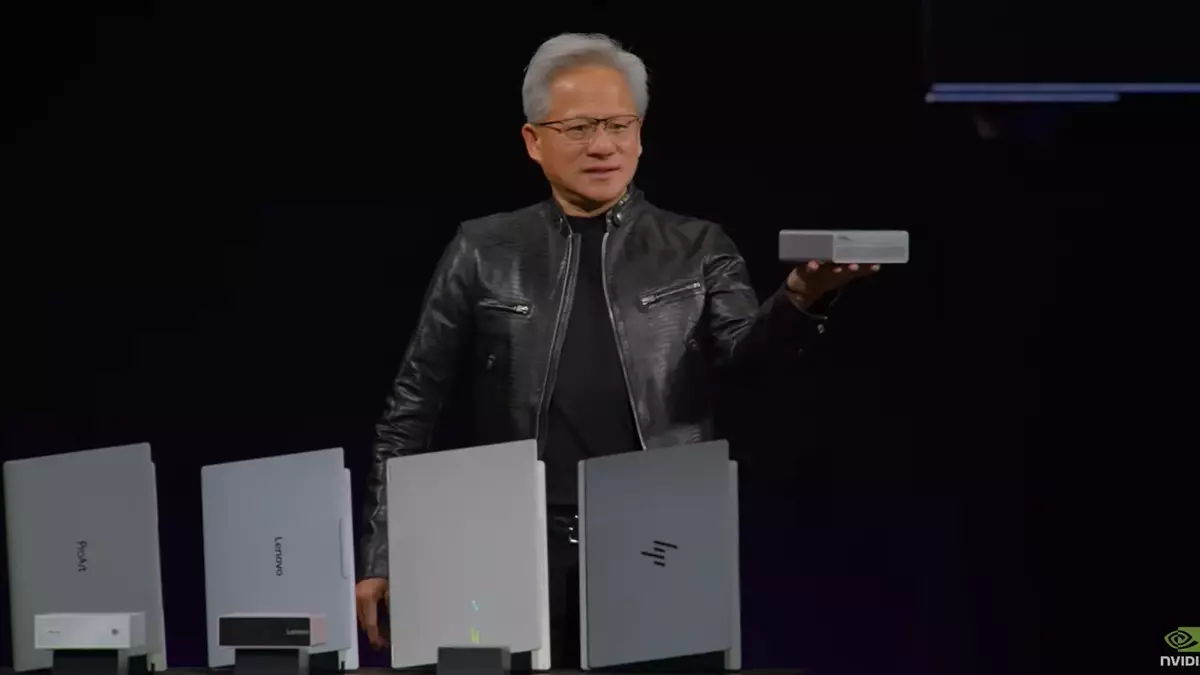
NVIDIA's CEO, Jensen Huang, has clarified that the company is currently not prioritizing the development of handheld gaming devices based on its new RTX Spark system-on-chip. Instead, the tech giant is channeling its efforts into the ambitious endeavor of revolutionizing the personal computer landscape for the age of artificial intelligence. This strategic direction suggests that while RTX Spark possesses significant potential for various applications, its immediate future lies in reshaping the traditional PC experience, rather than venturing into the portable gaming sector.
Huang emphasized the monumental scale of "reinventing the PC after 40 years," highlighting the extensive work involved in ensuring seamless integration with Windows and x86 environments, alongside robust anti-cheat support for games. This undertaking, which has spanned years of collaboration with industry partners like Microsoft and MediaTek, underscores NVIDIA's commitment to delivering a transformative PC platform. The complexities of adapting an entirely new architecture to existing software ecosystems, coupled with the rigorous testing required for optimal performance and compatibility, consume a considerable portion of the company's resources and attention.
NVIDIA's Strategic Shift: Prioritizing PC Over Portable Gaming
Jensen Huang, NVIDIA's CEO, recently unveiled that the company's primary strategic objective is centered on a groundbreaking initiative to redefine the personal computer for the burgeoning era of artificial intelligence, utilizing the new RTX Spark SoC. This ambitious undertaking, which Huang describes as a "gigantic project," currently eclipses any plans for developing a dedicated handheld gaming PC. The decision stems from the extensive and intricate work necessary to ensure the RTX Spark's seamless integration and optimal performance within the existing Windows and x86 software ecosystem. This includes rigorous testing and implementation of features like anti-cheat technologies, which are crucial for the gaming community but demand significant development resources.
The company's focus is intensely directed towards overcoming the technical hurdles associated with introducing a new architecture to a mature computing platform. Huang pointed out that this reinvention involves years of close collaboration with key partners such as Microsoft and MediaTek, signifying a deep commitment to perfecting the core PC experience. The sheer scale of this project, involving hundreds of engineers and vast investments, positions the traditional PC as the immediate beneficiary of NVIDIA's innovation, leaving handheld gaming as a secondary consideration for the foreseeable future. This strategic emphasis on the foundational computing platform reflects a broader vision for NVIDIA's role in the evolving tech landscape.
The Intricacies of RTX Spark and its Handheld Potential
The RTX Spark, NVIDIA's latest system-on-chip, boasts impressive specifications, including 20 Arm cores and a GPU performance akin to a desktop RTX 5070. While these capabilities would theoretically make it an ideal candidate for a high-performance gaming handheld, CEO Jensen Huang's remarks suggest a distinct lack of focus on such applications. The current iteration of RTX Spark, with its powerful components, is likely too large and power-intensive for integration into compact portable gaming devices, despite NVIDIA's claims of superior battery life compared to existing RTX laptops. The immediate priority is clearly the desktop and laptop PC market, where the full potential of RTX Spark can be realized in a larger form factor.
However, industry speculation hints at the potential for a more compact variant of the RTX Spark, internally codenamed N1, featuring fewer CPU cores and a significantly smaller GPU. This scaled-down version could present a viable option for future handheld gaming consoles, offering a balance of performance and efficiency suitable for a portable form factor. Yet, Huang's current stance indicates that NVIDIA is not actively pursuing these partnerships or developments. This strategic choice underscores a broader trend where NVIDIA appears to be shifting its core attention away from gaming-specific innovations, instead dedicating its extensive resources to the more pervasive and rapidly expanding domain of AI-driven PC technology. The commitment to "reinventing the PC" for AI applications signals a long-term vision that, for now, places handheld gaming on the back burner.