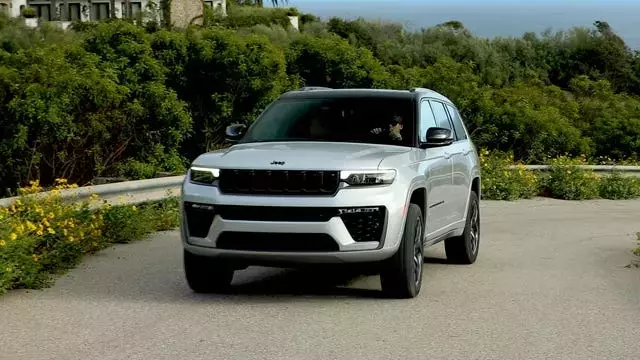
Jeep has announced a significant recall affecting over 400,000 Grand Cherokee and Grand Cherokee L SUVs. This action stems from a detected software flaw within the Occupant Restraint Controller (ORC) system. This malfunction could potentially lead to a delayed deployment of the side airbags during an impact, thereby increasing the risk of injury to occupants. The National Highway Traffic Safety Administration (NHTSA) has been instrumental in identifying and documenting this safety concern. To rectify this, Jeep dealerships will perform a software update on the affected vehicles, ensuring the proper and timely operation of the side airbags. Vehicle owners are advised to remain vigilant for notifications regarding this critical safety measure, with the communication process set to commence in mid-June.
This widespread recall aims to address a critical safety issue impacting a substantial number of popular SUV models. The core problem lies within the Occupant Restraint Controller's software, which, under specific conditions, might not trigger the side airbags as rapidly as required in the event of a crash. Such a delay could have serious implications for passenger protection, making immediate and effective deployment paramount for minimizing injury severity. Jeep is proactively taking steps to mitigate this risk by providing a no-cost software remedy. Owners are encouraged to promptly respond to the recall notices and schedule the necessary service to ensure their vehicles meet the highest safety standards and to avoid any potential compromises to passenger safety.
Jeep Initiates Major Recall for Airbag Software Glitch
Jeep has announced a substantial recall impacting over 419,000 Grand Cherokee and Grand Cherokee L SUVs due to a critical software defect. This issue, identified by the National Highway Traffic Safety Administration (NHTSA), involves the Occupant Restraint Controller (ORC), which may suffer from a software error causing a delay in side airbag deployment during a collision. The recall covers 2022–2026 Grand Cherokee models and 2023–2025 Grand Cherokee L models, with the latter comprising the majority of affected vehicles. This flaw could significantly increase the risk of injury in the event of an accident, making timely remediation essential for passenger safety.
The problem originates from a persistent fault within the ORC software that keeps the door airbag pressure sensor active, potentially delaying side airbag inflation. Although there are no known warnings preceding the fault, once activated, a continuous airbag light on the dashboard accompanied by a chime during each ignition cycle will alert drivers. Jeep technicians will resolve this by updating the ORC software. This recall does not require owners to stop driving their vehicles, and notifications are scheduled to be sent out between June 11 and June 19. Owners can verify if their vehicle is affected by consulting the NHTSA website, ensuring they can take prompt action to address this important safety concern.
Addressing the Software Fault and Ensuring Occupant Safety
The recall primarily focuses on rectifying a software anomaly in the Occupant Restraint Controller (ORC) of the affected Jeep Grand Cherokee and Grand Cherokee L vehicles. This software flaw is critical as it directly impacts the operational efficiency of the side airbags, which are vital safety components designed to protect occupants during a crash. A delayed deployment could compromise the effectiveness of these airbags, potentially leading to more severe injuries. Jeep's proactive measure to update the ORC software aims to restore the intended functionality of the airbag system, ensuring that it operates as designed to maximize occupant protection in a collision.
The resolution for this recall involves a straightforward software update at authorized Jeep dealerships. This update is designed to permanently eliminate the fault that causes the delay in side airbag deployment. Owners will be informed of this recall starting in mid-June, and it is crucial for them to schedule the necessary service to prevent potential safety hazards. The absence of a "Do Not Drive" warning indicates that while the issue is serious, it does not immediately render the vehicles unsafe for use, though prompt action is highly recommended. By providing this software patch, Jeep is committing to enhancing the safety of its vehicles and ensuring peace of mind for its customers, underscoring the importance of proper functioning safety features in modern automobiles.