Trending Searches
Ferrari Luce: A Controversial Electric GT Challenging Brand Perceptions

Ferrari's Bold Bet: Redefining Luxury in the Electric Era
Market Reaction to Ferrari's Latest Electric Offering
Upon its grand reveal in Rome, Ferrari's new electric Grand Tourer, the Luce, faced an immediate market test. Within three days, shares on the Milan stock exchange saw an eight percent decline, erasing billions in market value. While the stock eventually stabilized near its initial price, the immediate investor reaction highlighted significant concerns. This initial market volatility was a stark indicator of the skepticism surrounding Ferrari's venture into the electric vehicle segment, especially with a model that challenged established brand perceptions.
The Unkind Words: Early Criticisms and Comparisons
The reception for the Luce was far from warm. Italian opposition politician Carlo Calenda, a former Ferrari employee, lambasted the car as an "aesthetic and technological insult." Former Ferrari chairman Luca Cordero di Montezemolo also publicly voiced strong disapproval of the company's new direction. Online discussions were particularly harsh, with many comparing the $640,000 sedan to a Nissan. Nissan even briefly joined the online chatter, posting a sarcastic comment about flattery before quickly retracting it, underscoring the widespread derision and questioning of the Luce's identity as a true Ferrari.
Unpacking the Luce: Features and Market Positioning
The Ferrari Luce boasts impressive specifications: a price tag of approximately $640,000, 1,050 horsepower, and a projected range of around 329 miles. It features a four-door, five-seat configuration, with deliveries expected to commence in October. In the realm of production luxury EVs, the Luce currently stands as the most expensive offering. These characteristics firmly position it in an exclusive, high-end market segment, appealing to a clientele less concerned with conventional value propositions and more with prestige and innovation.
Comparing the Luce with the Lucid Air Sapphire: A Study in Contrasts
A natural comparison arises with the Lucid Air Sapphire, which, on paper, appears to be a superior contender. The Sapphire offers 1,234 horsepower, accelerates to 60 mph in a mere 1.89 seconds, and boasts an impressive EPA range of 427 miles, all at a significantly lower price point of around $250,000. However, this direct comparison, while popular online, misses the fundamental difference in purpose. The Lucid Air Sapphire is a testament to engineering prowess, designed to push performance boundaries. In contrast, the Luce aims for a distinct ownership experience, focusing on brand heritage, an established dealer network, strong residual values, and the unique social cachet associated with the Ferrari name.
Against the Rolls-Royce Spectre: A More Nuanced Rivalry
A more apt comparison for the Luce is the Rolls-Royce Spectre, though this connection is rarely made. Both vehicles are electric grand tourers catering to clients who value factors beyond raw performance. The Spectre, a four-seater with 585 horsepower and an EPA-estimated range of up to 329 miles, starts at $397,750. While seemingly a direct rival, the two cars diverge significantly in their core philosophies. The Spectre emphasizes supreme silence and traditional luxury, whereas the Luce combines opulent silence with the immediate availability of immense power. Furthermore, the Luce's interior, a result of a five-year design collaboration with Jony Ive and Marc Newson's LoveFrom, deliberately eschews large central touchscreens, prioritizing driver focus over digital interfaces. With Lamborghini having abandoned its all-electric Lanzador project due to low demand, the Luce finds itself in a unique position with no direct competitor, highlighting Ferrari's confidence in carving out a new niche for its electric vehicles.
Lessons from the Past: The Ferrari 412 Analogy
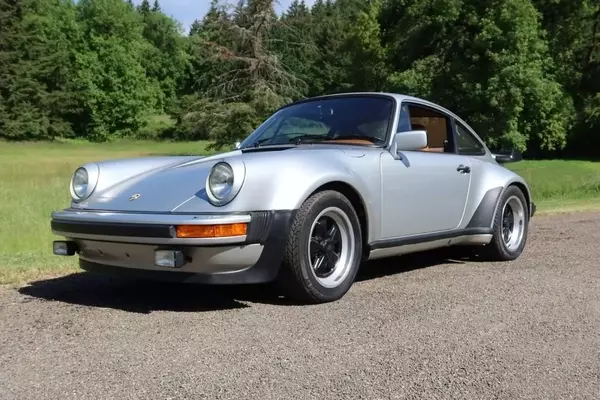
Ferrari's current challenge with the Luce echoes the reception of the 1985 Ferrari 412. Unveiled at the Geneva Motor Show, the 412 was a four-seat, front-engined grand tourer, prioritizing comfort and luxury over track performance. Critics, including Jeremy Clarkson, derided it as "awful," finding it too comfortable and not sporty enough for a Ferrari. Despite the criticism, Ferrari continued its production for seventeen years, selling 2,897 units across its lineage, demonstrating that a significant number of buyers desired such a vehicle. The 412's unexpected success with a different audience serves as a historical precedent for Ferrari's ability to navigate critical backlash and identify new market demands, albeit at a lower price point and in a less competitive environment.
The Modern Challenge: High Stakes for the Luce
While the 412's story offers a compelling analogy, the Luce faces a far more demanding landscape. Its exorbitant price, the nascent state of the ultra-luxury EV market, and the amplified critical voices present a formidable challenge. The question remains whether Ferrari can replicate its past success in attracting an overlooked demographic, particularly when the stakes are significantly higher and the technological shifts more profound. The initial strong order numbers from both loyal and new customers provide an early glimmer of hope, but the true measure of the Luce's success will unfold over its product cycle.
Ferrari's Vision: Catering to an Unconventional Buyer
Ferrari understands that the Luce is not designed for the traditional enthusiast. Instead, it targets a customer base that the Rolls-Royce Spectre nearly satisfies and the Lucid Air Sapphire cannot reach—a buyer who seeks a Ferrari for everyday living rather than solely for performance boasts. This discerning individual sees no contradiction in a silent, powerful, and luxurious electric vehicle, valuing the brand's heritage and an elevated ownership experience. Ferrari CEO's recent comments on positive order traction suggest that this niche, though perhaps smaller than anticipated, does indeed exist. Ultimately, the Luce represents Ferrari's bold reinterpretation of its brand identity for the electric era, testing the boundaries of what a Ferrari can be and who it serves.
Related Articles
Identifying Reliable Toyota RAV4 Models: A Guide to Avoiding Problematic Years
Ford's Potential Four-Door Mustang: Blending Performance and Practicality