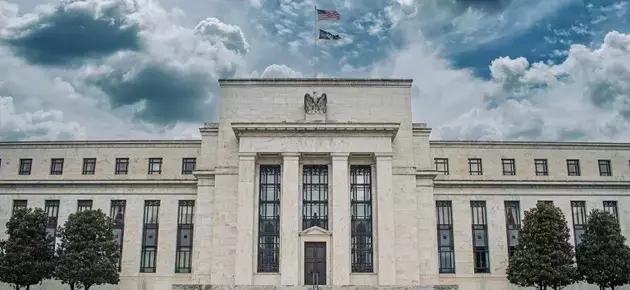
The Federal Reserve's balance sheet has become a central point of discussion as it continues to expand, reflecting a renewed phase of quantitative easing despite previous efforts towards tightening. This detailed examination highlights the shifting dynamics in the Fed's monetary policy, the implications for the US debt market, and the diminishing international appetite for American government bonds.
Following a brief period of quantitative tightening, the Federal Reserve initiated a new round of quantitative easing. In March and April, the Fed injected $43 billion into the economy, with an additional $4 billion added in May. This resumption of expansionary policy means the Fed's balance sheet, currently at a substantial $6.7 trillion, is set to grow further, potentially exceeding $10 trillion during the next economic downturn. This continuous expansion raises questions about long-term financial stability and the efficacy of traditional monetary tools.
A critical aspect of the current financial landscape is the fluctuating yield on US Treasuries, which has largely remained between 3.25% and 4.75% since September 2022. This stability belies a significant underlying challenge: the decreasing international demand for newly issued US debt. Over the past 18 months, the Treasury has issued approximately $4 trillion in new debt, yet international investors have only absorbed about 10% of this amount. This indicates a growing reliance on domestic buyers, potentially signaling a lack of confidence from foreign entities and increasing the vulnerability of the US bond market.
Furthermore, China, a major historical holder of US debt, has been steadily reducing its Treasury holdings. This trend exacerbates the issue of declining international participation. The Fed's current strategy involves offsetting new quantitative easing by selling mortgage-backed securities and aggressively purchasing short-term debt. This intervention aims to steepen the yield curve and maintain market liquidity. However, such an approach is largely seen as unsustainable in the long run, particularly if external buyers continue to pull back from the US debt market.
The current state of the Federal Reserve's balance sheet and the challenges in debt absorption underscore a pivotal moment for the US economy. The ongoing expansion of the balance sheet, coupled with decreased international interest in US Treasuries, highlights significant structural vulnerabilities. The reliance on domestic support and the Fed's market interventions, while offering short-term stability, point towards a complex and potentially precarious future for the nation's fiscal health.