Embracing the Era of Advanced Robotics
From Concept to Reality: Humanoid Robots Enter the Workforce
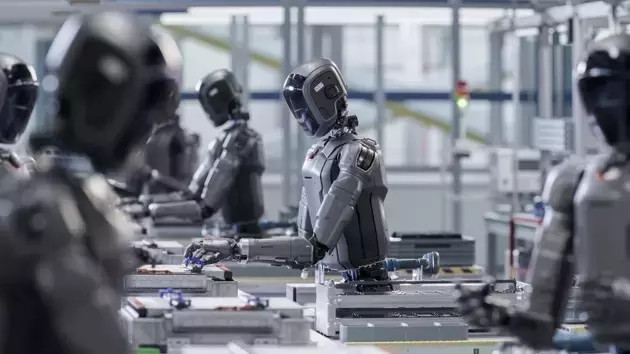
The field of humanoid robotics has transitioned from being primarily a subject of theoretical discussions and controlled experiments to actively integrating into industrial environments. This evolution signifies a new phase where advanced robotic systems are no longer just prototypes but functional tools for various tasks. The initial stages of development, characterized by carefully choreographed demonstrations, have given way to practical, sustained operations in real-world settings. This marks a critical milestone, highlighting the maturity and reliability of humanoid technology.
Figure AI's Endurance in Automated Logistics
A notable example of this progression is Figure AI, an American robotics firm that recently demonstrated the remarkable capabilities of its Figure 03 humanoid. This robot successfully performed package sorting autonomously for an impressive 200 consecutive hours. This extensive live demonstration underscored the robot's operational endurance, precision, and ability to handle repetitive tasks without human intervention. Such achievements are crucial for proving the commercial viability and efficiency of humanoid robots in logistics and similar industries, paving the way for broader adoption.
Hyundai's Vision: Mass Deployment of Atlas Humanoids
Further solidifying the industry's forward momentum, Hyundai Motor Group, the corporate entity behind Boston Dynamics, has unveiled ambitious plans for the large-scale deployment of humanoid robots. The company intends to integrate more than 25,000 Atlas humanoid robots across its extensive network of Hyundai and Kia manufacturing facilities by 2028. This strategic move illustrates a strong commitment to automation and artificial intelligence, aiming to enhance productivity, safety, and efficiency in complex automotive manufacturing processes. It also highlights the growing confidence in humanoid technology to perform sophisticated tasks within dynamic industrial settings.
The Competitive Landscape: Catching Up with Unitree
While industry giants like Boston Dynamics, Figure AI, and Tesla are making significant strides, they are currently working to narrow the gap with the existing market leader, Unitree. In 2025, Unitree demonstrated its dominance by shipping approximately 5,500 humanoid units, a volume that significantly surpasses its competitors. This highlights a vibrant and competitive market where innovation and rapid deployment are key. The efforts of these leading companies are collectively pushing the boundaries of what humanoid robots can achieve, driving continuous advancements in design, functionality, and widespread integration into various sectors.