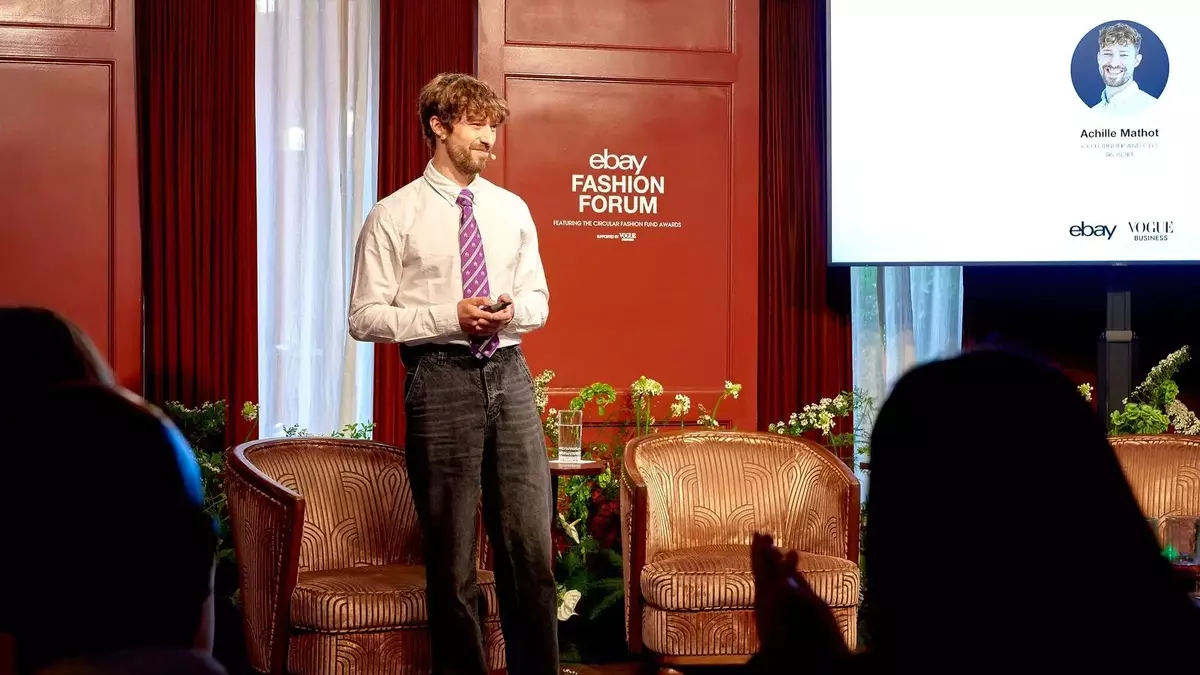
The eBay Fashion Forum, held in New York, recently showcased the dynamic shifts occurring within the fashion industry, emphasizing circularity, technological advancements, and strategic brand development. This significant event also featured the eBay Circular Fashion Fund Awards, an initiative proudly backed by Vogue Business for the second consecutive year. The forum served as a vital platform for bringing together diverse stakeholders from across the fashion ecosystem to engage in meaningful dialogue about the sector's future.
Throughout the day, eight finalists of the Circular Fashion Fund presented their innovative business concepts to a distinguished panel of judges. Interspersed with these presentations were insightful panel discussions. Phoebe Gates, co-founder of Phia, shared her perspectives, as did Sonia Mosseri, co-founder and creative director of Still Here, and Christina Ripley, co-founder and brand and strategy director of Christopher John Rogers. These discussions enriched the event, offering varied insights into the evolving landscape of fashion. Trosort, founded by Achille Mathot, emerged as the victor of the 2026 awards, securing a substantial $300,000 investment from eBay Ventures.
Innovations in Circular Fashion and AI's Impact
The eBay Fashion Forum brought together industry leaders to explore advancements in circularity and the transformative role of AI. Trosort, the winning startup, presented its groundbreaking textile sorting automation technology designed to combat textile waste by efficiently categorizing garments for resale, showcasing a tangible solution to a pressing environmental issue. Alongside this, discussions with Phia co-founder Phoebe Gates highlighted how AI is reshaping consumer experiences by personalizing shopping discovery and cutting through market clutter. This integration of technology signifies a pivotal shift towards more sustainable and consumer-centric models in fashion.
Achille Mathot, the visionary behind Trosort, detailed his company's innovative hardware and AI system, capable of digitally identifying and sorting 1,200 garments per hour. This technology not only streamlines the sorting process but also automates resale listings, offering a comprehensive service to sorting centers. Mathot's ambition is to make Trosort the central intelligence for these facilities, significantly reducing landfill waste. Echoing this embrace of technology, Phoebe Gates, during her session on AI's influence on shopping, explained how Phia leverages AI to enhance product discovery, aiming to make shopping more enjoyable and less overwhelming while retaining a human element of curation. These insights underscore a future where technology and sustainability are intrinsically linked in fashion.
Redefining Luxury and Consumer Engagement
Luxury fashion brands are recalibrating their strategies to align with evolving consumer behaviors, emphasizing authenticity and a deep understanding of their customer base. During a panel titled 'Luxury's New Value System: How Changing Consumer Behaviors Are Reshaping Brand Priorities,' Sonia Mosseri of Still Here and Christina Ripley of Christopher John Rogers discussed their approaches to connecting with increasingly discerning consumers. Both brands, despite their differing business models, prioritize close engagement with their clientele, recognizing that today's consumers seek meaningful narratives and lasting value in their purchases. This shift reflects a broader industry movement towards more conscious and customer-focused practices.
Mosseri highlighted that contemporary consumers, inundated with products over the past decade, have become more astute in their choices. Still Here, a brand deeply rooted in physical retail, has honed its brand pillars and remains authentic to its identity, delivering products that genuinely resonate with its customers' desires. Ripley reiterated this sentiment, emphasizing the importance of targeting a specific consumer rather than a mass market. Christopher John Rogers, known for its runway shows and wholesale partnerships, aims to extend product lifecycles by creating emotionally resonant pieces that customers cherish. This deliberate focus on emotional appeal and product longevity signals a mindful deceleration within the fashion industry, fostering a deeper connection between brands and their patrons.