In the dynamic semiconductor industry, two key players, Arm Holdings and Qualcomm, are strategically positioning themselves to harness the immense potential offered by the advancements in artificial intelligence. This technological wave is set to redefine various sectors, from automotive to consumer electronics, thereby escalating the demand for advanced chip solutions. An examination of their respective financial trajectories reveals distinct operational models and market approaches, each with its unique strengths and challenges in this evolving technological era.
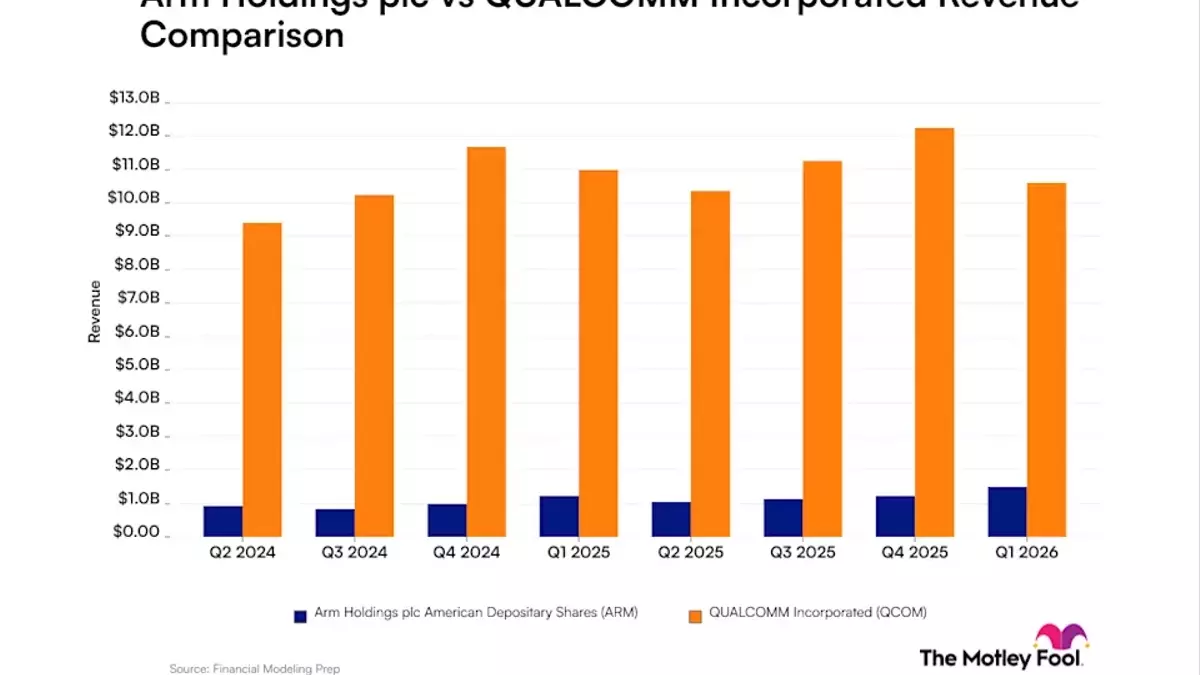
Arm Holdings, known for its intellectual property in central processing unit (CPU) designs, demonstrates a robust and steady increase in its income streams. Its business framework, primarily relying on licensing and royalty fees for its chip architectures, has consistently yielded strong financial returns, as evidenced by a 20% year-over-year revenue growth in the first quarter of 2026 and a healthy net income margin. This model allows Arm to maintain a strong presence across various device categories by providing foundational technologies to manufacturers worldwide. Conversely, Qualcomm, a leader in wireless communication technologies, has encountered more variability in its revenue expansion. The company is actively executing a significant strategic pivot, diversifying its efforts beyond the traditional mobile phone sector into promising new arenas such as automotive systems, the Internet of Things (IoT), and data centers. Despite a recent modest decline in quarterly revenue, Qualcomm reported an impressive net income margin, underscoring its profitability even during transitional periods. These strategic realignments are crucial for understanding each company’s long-term competitive stance.
Understanding a company's revenue performance is fundamental for investors, as it provides crucial insights into its market competitiveness and future expansion capabilities. The divergent revenue trends and strategic shifts between Arm and Qualcomm offer a compelling case study for market watchers. Arm’s consistent growth and its designs’ increasing adoption in advanced applications like AI agents underscore its strong market momentum. Meanwhile, Qualcomm’s ambitious transition into new high-growth segments, such as AI-powered consumer devices and data centers, represents its commitment to adapting to future market demands. The success of Qualcomm’s strategic transformation in accelerating its revenue growth will be a critical factor in determining if it can close the performance gap with Arm in the coming years.
The semiconductor industry is at the forefront of innovation, driven by the relentless march of artificial intelligence. Companies like Arm and Qualcomm, through their distinct strategies and technological prowess, are not just competing but are actively shaping the future digital landscape. Their ongoing evolution and adaptation to emerging trends signify a vibrant sector filled with opportunities for growth and technological breakthroughs, ultimately benefiting global innovation and economic progress.